
Stage 1 Year 2 Science Unit – Forces Can Change the Way Objects Move

Stage 1 Year 2 Science Unit – Forces Can Change the Way Objects Move
Stage 1 Year 2 Science Unit – Forces Can Change the Way Objects Move
$6.00
You won't be charged yet
Description
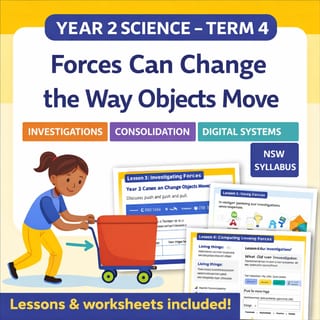
Forces Can Change the Way Objects Move Year 2 Science – Term 4 (NSW Syllabus Aligned)
Stage 1 - Year 2
Term 4
This Year 2 Science unit is a complete, ready-to-teach Term 4 resource exploring how forces (pushes and pulls) affect the way objects move. The unit supports students to conduct simple investigations, record observations, compare scientific learning from across the year, and explain results using appropriate scientific language.
Designed specifically for Stage 1 – Year 2, this unit is ideal for end-of-year consolidation, providing meaningful science learning without introducing unnecessary overload.
What’s Included:
✔ Editable PowerPoint slides for all lessons
✔ Student worksheets for each lesson (printable & PDF-friendly)
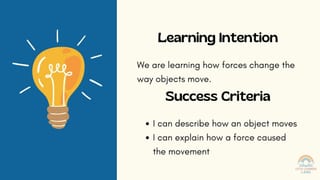
✔ Clear learning intentions and success criteria
✔ Hands-on investigations and data recording tasks
✔ Explicit science consolidation lesson
✔ Optional Digital Technologies link (algorithms)
✔ Teacher-friendly structure with minimal prep required
Unit Overview:
Across this unit, students will:
- explore what forces are and how they work
- investigate how pushes and pulls change movement
- make predictions and record results
- compare investigations from across the year (living things, light, sound and forces)
- explain scientific results using sentence stems and oral discussion
- sequence steps to demonstrate simple algorithms (optional digital systems lesson)
Lesson Breakdown:
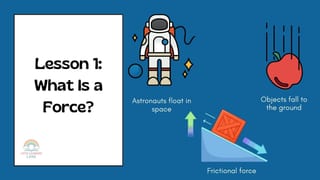
Lesson 1: What Is a Force? Students learn that a force is a push or a pull and identify forces in everyday situations.
Lesson 2: How Forces Change Movement Students explore how forces can start, stop or change the speed and direction of objects.
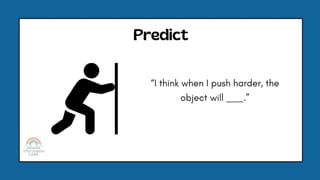
Lesson 3: Investigating Forces Students conduct a simple investigation, make predictions, test different strengths of force, and record results.
Lesson 4: Comparing Our Investigations (Science Consolidation) Students reflect on and compare investigations completed across the year, identifying similarities and differences in scientific processes.
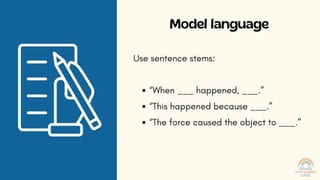
Lesson 5: Explaining Results Like Scientists Students practise explaining what happened and why, using structured sentence stems and scientific vocabulary.
Lesson 6: Forces and Digital Systems (Optional) Students sequence steps to show how a force causes movement, introducing algorithms and input–output thinking without the need for technology.
Curriculum Alignment:
This unit aligns with the NSW Science & Technology K–6 Syllabus (2024) and addresses:
- ST1-SCI-01 – Investigates observable changes
- ST1-PQU-01 – Poses questions and conducts investigations
- ST1-DAT-01 – Collects and records data
- ST1-DDT-01 – (Optional) Digital systems and algorithms
Why Teachers will love this unit:
✔ Perfect for Term 4
✔ Strong focus on investigation and explanation
✔ Supports science consolidation
✔ Minimal prep, maximum impact
✔ Clear links to prior learning
✔ Developmentally appropriate for Year 2
Description
Forces Can Change the Way Objects Move Year 2 Science – Term 4 (NSW Syllabus Aligned)
Stage 1 - Year 2
Term 4
This Year 2 Science unit is a complete, ready-to-teach Term 4 resource exploring how forces (pushes and pulls) affect the way objects move. The unit supports students to conduct simple investigations, record observations, compare scientific learning from across the year, and explain results using appropriate scientific language.
Designed specifically for Stage 1 – Year 2, this unit is ideal for end-of-year consolidation, providing meaningful science learning without introducing unnecessary overload.
What’s Included:
✔ Editable PowerPoint slides for all lessons
✔ Student worksheets for each lesson (printable & PDF-friendly)
✔ Clear learning intentions and success criteria
✔ Hands-on investigations and data recording tasks
✔ Explicit science consolidation lesson
✔ Optional Digital Technologies link (algorithms)
✔ Teacher-friendly structure with minimal prep required
Unit Overview:
Across this unit, students will:
- explore what forces are and how they work
- investigate how pushes and pulls change movement
- make predictions and record results
- compare investigations from across the year (living things, light, sound and forces)
- explain scientific results using sentence stems and oral discussion
- sequence steps to demonstrate simple algorithms (optional digital systems lesson)
Lesson Breakdown:
Lesson 1: What Is a Force? Students learn that a force is a push or a pull and identify forces in everyday situations.
Lesson 2: How Forces Change Movement Students explore how forces can start, stop or change the speed and direction of objects.
Lesson 3: Investigating Forces Students conduct a simple investigation, make predictions, test different strengths of force, and record results.
Lesson 4: Comparing Our Investigations (Science Consolidation) Students reflect on and compare investigations completed across the year, identifying similarities and differences in scientific processes.
Lesson 5: Explaining Results Like Scientists Students practise explaining what happened and why, using structured sentence stems and scientific vocabulary.
Lesson 6: Forces and Digital Systems (Optional) Students sequence steps to show how a force causes movement, introducing algorithms and input–output thinking without the need for technology.
Curriculum Alignment:
This unit aligns with the NSW Science & Technology K–6 Syllabus (2024) and addresses:
- ST1-SCI-01 – Investigates observable changes
- ST1-PQU-01 – Poses questions and conducts investigations
- ST1-DAT-01 – Collects and records data
- ST1-DDT-01 – (Optional) Digital systems and algorithms
Why Teachers will love this unit:
✔ Perfect for Term 4
✔ Strong focus on investigation and explanation
✔ Supports science consolidation
✔ Minimal prep, maximum impact
✔ Clear links to prior learning
✔ Developmentally appropriate for Year 2