Graph Paper Printable (Free A4 PDF)
Pick a square size. The ruler shows what it measures on paper.
Print at Actual size (100 percent).
More paper
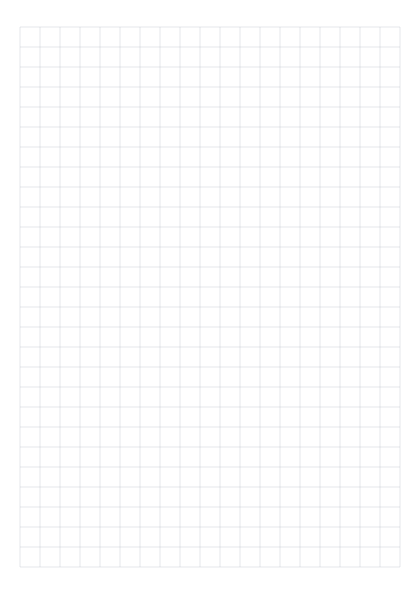

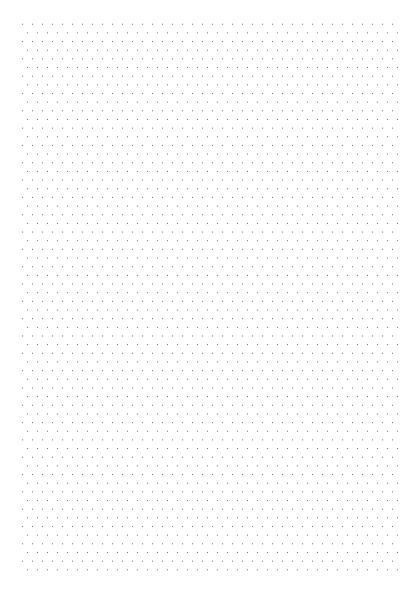

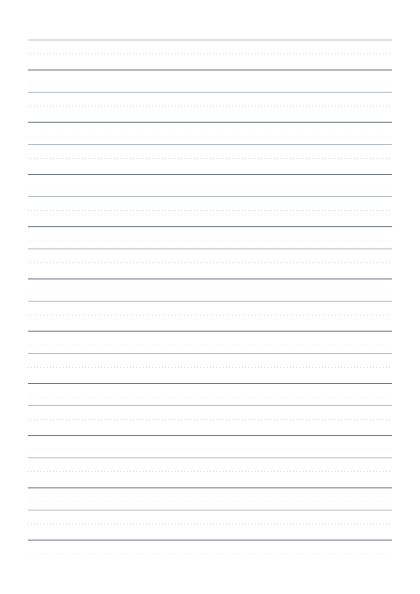
Graphing and coordinates resources
What graph paper is for in an Australian classroom
Graph paper is squared paper for anything that has to line up: column graphs and line graphs, scale drawings, area and perimeter, and plotting points on a Cartesian plane. This page makes an A4 or A3 PDF with squares of 2 mm, 5 mm or 1 cm, and by default a heavier line every 10 mm so students can count along a graph in fives and tens.
- Area and perimeter: students count squares to find the area of a shape and trace its edge to find the perimeter. With 1 cm squares the answer is in square centimetres.
- Drawing graphs: column graphs, line graphs and scatter plots, where each square stands for one unit, two or ten.
- Coordinates: draw the axes, then plot and join points, first in one quadrant and later in all four.
- Scale drawings and enlargement: copy a shape square by square, then again at double the size.
- Science and design: turn a table of results into a graph, or plan a model to scale.
Which year levels use it
Squared paper appears from the middle primary years, where students find area by counting squares and draw their first graphs, through upper primary coordinates and scale, and into secondary mathematics and science where graphs are drawn by hand. Choose 1 cm squares for younger students, 5 mm squares for most graph work, and 2 mm squares when points have to be plotted precisely.
How to print it at true size
The squares, dots and lines are drawn in millimetres, so the paper is as accurate as your printer. Press Download PDF and open the file, or press Print to send it to the printer. Print at 100 percent, which some printers call Actual size, and never Fit to page. Ten 5 mm squares should measure 5 cm with a ruler.
Printers leave a thin unprintable edge, so the paper is drawn inside a margin of at least 1 cm. A3 is the same drawing on a bigger sheet: it has more squares or lines, not bigger ones.
Other free tools that go with it
- Number line, for the one dimensional version of plotting.
Questions teachers ask
What size are the squares on this graph paper?
You choose: 2 mm, 5 mm or 1 cm. The default is 5 mm squares with a heavier line every 10 mm. Each size prints at its true size, so a 5 mm square is 5 mm on the paper.
Is the graph paper PDF free?
Yes. Download the PDF or send it straight to the printer, in A4 or A3 where it is offered. It is free for 5 sheets a month, with no sign-up. The Tools Pass removes the limit.
How do I print graph paper at the right size?
Open the PDF and print it at 100 percent, which some printers call Actual size. Do not choose Fit to page or Shrink to fit, because that scales the paper and every measurement on it. To check, hold a ruler against the page: ten 5 mm squares should measure 5 cm.
What is the difference between graph paper and grid paper?
Many people use the two words for the same thing. Graph paper here has a heavier line every centimetre, which makes counting and plotting quicker, and you can switch it off under More options for an even grid. For plain 1 cm squares, see the 1 cm grid paper page.
Can I print graph paper for the photocopier?
Choose Black under Line colour. Grey and light blue are paler and can fade or vanish on a photocopier, so black is the safe choice for a class set.
Can I print graph paper on A3 or in landscape?
Choose A3 under Paper. The spacing stays exactly the same, so A3 holds more of it rather than larger squares or lines. Landscape is under Page, and it fits a long graph or timeline.